Patient Journey · Columbus, GA

Calcium deposit pain, and how it's sorted out here

Calcific tendonitis can be confusing: the pain sometimes appears out of nowhere, sometimes lingers for months, and the deposit behind it can behave very differently from one person to the next. Here is what a careful, imaging-led evaluation looks like for patients in the Columbus area — and how treatment decisions get made.

SA
Dr. Siraj Abdullah, DO
Sports Medicine & Family Practice · Columbus, GA
(334) 366-8167

Patient Experience

A Patient's Firsthand Account

Hear a TenJet patient describe the procedure and the recovery, in their own words rather than clinical terms.

TenJet Patient Testimonial

Video courtesy of HydroCision, Inc., the maker of TenJet®. Individual results vary; this patient's experience is not a guarantee of outcome. Talk with a specialist about whether the procedure is appropriate for you.

Understanding The Condition

What the deposit is doing

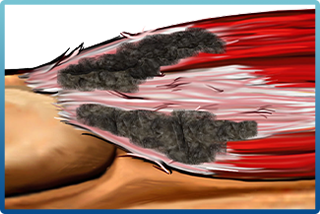
In calcific tendonitis, calcium crystals collect inside a tendon — most commonly in the shoulder. The deposit tends to move through phases, and in some people it breaks down in a way that sets off a sharp, though usually temporary, flare. Because the picture varies so widely, imaging is what tells a specialist which stage a deposit is in and whether it calls for treatment at all.

Most often affects the shoulder, but other tendons can be involved
Pain may simmer for months, then flare intensely for a period
X-ray and ultrasound show the deposit and help guide the plan
Some deposits settle on their own; others benefit from intervention

Treatment Options

Matched to the deposit and the tendon

Care is stepwise. Many patients improve with physical therapy and anti-inflammatory measures. When symptoms persist, specialists turn to image-guided, in-office options — and which one fits depends on the deposit, the tendon, and how much of the surrounding tendon has been affected. Dr. Abdullah will determine the approach that suits your case.

Physical therapy and anti-inflammatory measures as a starting point
Ultrasound-guided needle procedures directed at the deposit
For associated tendon degeneration, TenJet may be considered
The decision is individualized and led by imaging and exam

Where TenJet Fits

Treating diseased tendon tissue directly

TenJet, made by HydroCision, Inc., is a percutaneous device used under ultrasound guidance to treat degenerated tendon tissue — the weakened, disorganized tissue that can build up alongside a long-standing tendon problem. Whether it is appropriate for a particular case of calcific tendonitis is a judgment your specialist makes after examining you and reviewing your imaging.

Guided the whole way by real-time ultrasound
A concentrated saline stream emulsifies diseased tissue, sparing healthy fibers
Built-in suction removes that debris in the same session
A small incision under local anesthesia — typically performed in-office
Reimbursed by Medicare and most private insurers when indicated
Learn more directly from HydroCision →

See The Procedure

TenJet® in Action

A general demonstration from HydroCision of how the procedure works, plus a look at how healthy tendon tissue differs from tissue that has degenerated over time.

TenJet Patient Animation — How the Procedure Works

Healthy tendon fiber structure diagram
Healthy Tendon
Tendinitis inflamed tendon diagram
Tendinitis
Tendinosis degenerated tendon fiber diagram
Tendinosis (Chronic Degeneration)

Diagrams and video courtesy of HydroCision, Inc.

Get Started

Reach a specialist directly

Call the office below to ask how calcific tendonitis is evaluated and which treatment approach may be right for you.

Dr. Siraj Abdullah, DO — Columbus, GA
(334) 366-8167

Common Questions

Frequently Asked Questions

How is calcific tendonitis diagnosed?

Usually with ultrasound, sometimes with radiographs. Published cases describe well-defined deposits with posterior acoustic shadowing, which helps determine whether a deposit is mature.

Is treatment available in Columbus?

Yes, locally in Columbus, Georgia, through Dr. Siraj Abdullah, without the need to travel to a metro Atlanta practice.

Does the calcium come back?

Follow-up imaging in published cases showed no residual calcification at six months. Longer-term recurrence depends on the underlying tendon condition.

How painful is calcific tendonitis?

It can be severe. One documented shoulder case reported constant pain at 8 out of 10 rising to 10 out of 10 with activity, and pain that worsened while sleeping.

This information is general and is not medical advice. Whether any procedure is appropriate for you can only be determined by a physician who has examined you and reviewed your imaging.

Speak Directly With The Physician's Office
Call the office below to ask about care for calcific tendon pain.
SA
Dr. Siraj Abdullah, DO
Sports Medicine & Family Practice
Columbus, GA
(334) 366-8167